Precision Medicine
ENHERTU® Now Available in Japan as First Antibody Drug Conjugate for the Second-Line Treatment of Patients with HER2 Positive Metastatic Gastric Cancer
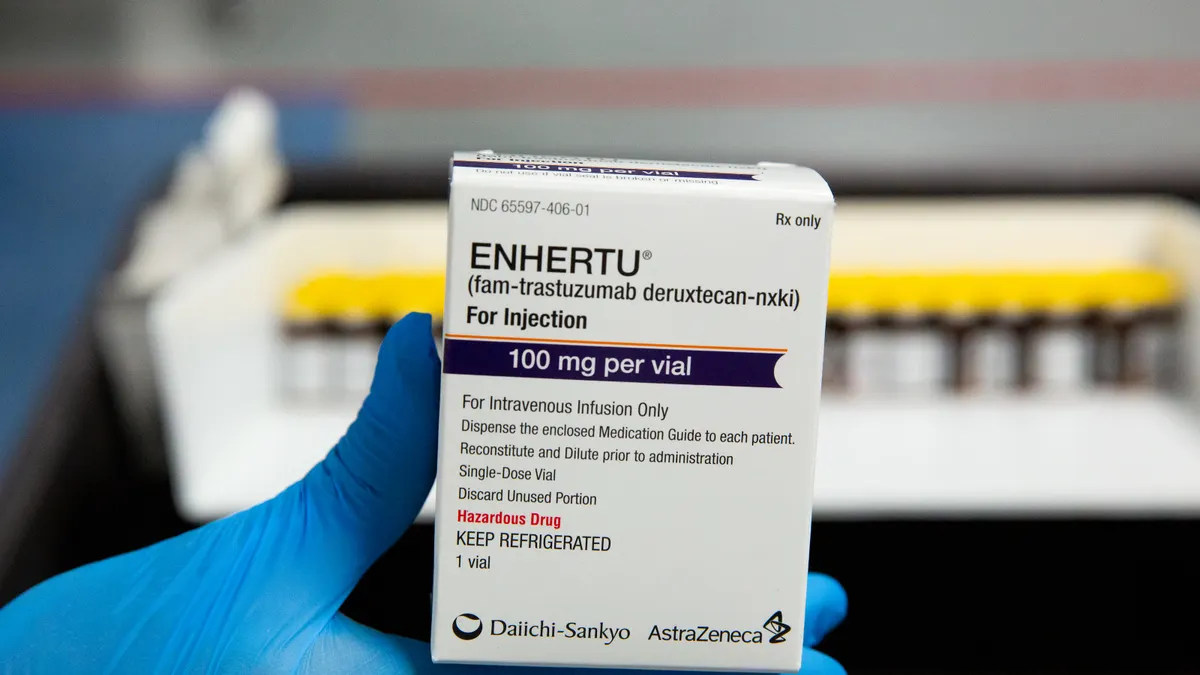
Based on DESTINY-Gastric04 phase 3 trial results that showed ENHERTU demonstrated statistically significant and clinically meaningful improvement in overall survival compared to ramucirumab plus paclitaxel
The Japan Pharmaceuticals and Medical Devices Agency (PMDA) has accepted the update of the ENHERTU® (trastuzumab deruxtecan) prescribing information following review of data from the DESTINY-Gastric04 phase 3 trial, which now expands the use of ENHERTU in Japan to include the second-line treatment of patients with HER2 positive (immunohistochemistry
ENHERTU is a specifically engineered HER2 directed DXd antibody drug conjugate (ADC) discovered by Daiichi Sankyo (TSE: 4568) and being developed and commercialized by Daiichi Sankyo in Japan
Gastric cancer is the third most common cancer in Japan. More than 125,000 cases of gastric cancer were diagnosed in Japan in 2022, with more than 43,000 deaths. Approximately one in five gastric cancers are considered HER2 positive. Prior to the results of DESTINY-Gastric04, no other HER2 directed medicine has demonstrated a survival benefit in the second-line metastatic setting in a randomized clinical trial
In DESTINY-Gastric04, ENHERTU demonstrated a 30% reduction in risk of death compared to ramucirumab plus paclitaxel in patients with second-line HER2 positive unresectable and/or metastatic gastric or gastroesophageal junction (GEJ) adenocarcinoma (hazard ratio
“Gastric cancer can be particularly challenging to treat and is associated with a poor prognosis, especially in the metastatic setting where outcomes are notably worse for patients with disease progression after first-line treatment,” said Yuki Abe, PhD, Head of R&D Division in Japan and Head of Research, Daiichi Sankyo. “The impressive survival results seen in DESTINY-Gastric04 support the expanded use of ENHERTU in Japan, making it available as a new second-line option for patients with HER2 positive metastatic gastric cancer.”
In DESTINY-Gastric04, the safety profile of ENHERTU was consistent with previous clinical trials with no new safety concerns identified. Adverse reactions occurred in 227 patients (93.0%) treated with ENHERTU (6.4 mg/kg), including 26 Japanese patients. The most common adverse reactions were fatigue (48.0%), decreased neutrophil count (48.0%), nausea (44.3%), anemia (31.1%), decreased appetite (29.1%), decreased leukocyte count (26.6%), decreased platelet count (26.6%), diarrhea (25.8%), alopecia (24.2%), increased transaminase (21.7%) and vomiting (20.1%).
ENHERTU is approved in Japan with a Warning in its prescribing information for interstitial lung disease (ILD). ILD occurred in 262 patients (11.6%) treated with ENHERTU across multiple clinical trials. As cases of ILD, including fatal cases, have occurred in ENHERTU-treated patients, ENHERTU is to be used in close collaboration with a respiratory disease expert. Patients should be closely observed during therapy by monitoring for early signs or symptoms of ILD (such as dyspnea, cough or fever) and performing regular peripheral artery oxygen saturation (SpO2) tests, chest X-ray scans and chest CT scans. If abnormalities are observed, discontinue administration of ENHERTU and take appropriate measures, such as corticosteroid administration. Prior to initiation of ENHERTU therapy, a chest CT scan should be performed and medical history taken to confirm the absence of any comorbidity or history of ILD with the patient and carefully consider the eligibility of the patient for ENHERTU therapy.
ADC TherapyDaiichi SankyoEnhertu
Loading news...
PODCAST

Events & Summits
Host or sponsor events that place your brand at the forefront of healthcare impact.
Podcast Features
Engage a wider audience with thought leadership shared across VOH's podcast channels.
Brand Solutions
Take center stage at healthcare forums to spark conversations and share bold perspectives.
Events & Summits
Host or sponsor events that place your brand at the forefront of healthcare impact.
Podcast Features
Engage a wider audience with thought leadership shared across VOH's podcast channels.
Brand Solutions
Take center stage at healthcare forums to spark conversations and share bold perspectives.