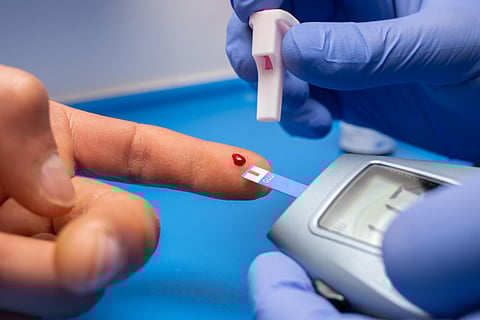

A widely used test for diagnosing and monitoring diabetes may not accurately reflect blood glucose levels in millions of South Asians, including Indians, according to a new evidence-based viewpoint published in The Lancet Regional Health: Southeast Asia on February 9, 2026.
The study highlights limitations of the glycated haemoglobin (HbA1c) test, which estimates average blood sugar levels over the past two to three months by measuring the percentage of glucose-coated haemoglobin. While HbA1c levels below 5.7 per cent are considered normal, 5.7–6.4 per cent indicate prediabetes, and levels of 6.5 per cent or higher suggest diabetes, the test may produce misleading results in populations with a high prevalence of anaemia, haemoglobinopathies, and glucose-6-phosphate dehydrogenase (G6PD) deficiency—conditions common in India.
Led by Professor Anoop Misra, the review questions the reliance on HbA1c as a sole diagnostic or monitoring tool for type 2 diabetes in South Asia. Since HbA1c reflects haemoglobin glycation, any condition affecting haemoglobin quantity, structure, or lifespan—such as anaemia or inherited blood disorders—can distort results, leading to under- or overestimation of actual blood glucose levels.
The authors note that exclusive dependence on HbA1c could delay diabetes diagnosis by up to four years in men with undetected G6PD deficiency, increasing the risk of complications. Variations in laboratory quality control may further compromise test accuracy, while public health surveys relying only on HbA1c could misrepresent India’s true diabetes burden.
To address these challenges, the study proposes a resource-adapted diagnostic and monitoring framework for India. In low-resource settings, it recommends using the oral glucose tolerance test (OGTT)—with fasting and two-hour post-glucose measurements—for diagnosis, along with self-monitoring of blood glucose two to three times a week and basic haematological screening. In tertiary care settings, a combination of HbA1c testing with OGTT for diagnosis and continuous glucose monitoring, along with alternative markers such as fructosamine, is advised. Where necessary, comprehensive iron studies, haemoglobin electrophoresis, and quantitative G6PD testing should be conducted.
The framework emphasises tailoring diabetes monitoring strategies to healthcare resources and individual risk factors, particularly in regions like India where anaemia, haemoglobinopathies, and G6PD deficiency are endemic. The authors conclude that in such settings, HbA1c should often be combined with other tests rather than used alone for diagnosing and monitoring diabetes.
