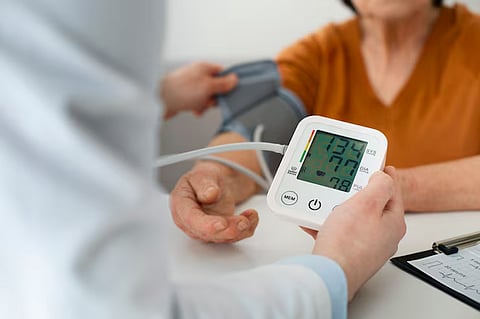

Treatment for hypertension could soon witness one of its biggest shifts in decades, as researchers develop long-acting injectable therapies designed to replace daily tablets with just two shots a year.
What once seemed futuristic is now advancing through late-stage clinical trials. Experts believe these therapies could significantly improve global blood pressure control, addressing one of the biggest gaps in cardiovascular care — poor medication adherence.
A recent review published in The Lancet underlines the urgency of new solutions. Although effective drugs have been available for years, hypertension control rates remain low worldwide, largely because patients struggle to consistently take daily medication.
High blood pressure remains the leading risk factor for heart attacks, strokes and premature deaths globally. The World Health Organization defines hypertension as blood pressure of 140/90 mm Hg or higher, while normal levels are below 120/80 mm Hg.
An estimated 1.4 billion adults aged 30 to 79 — nearly one in three — are living with hypertension worldwide, and almost half are unaware of their condition. Among those diagnosed, fewer than a quarter achieve adequate control.
India mirrors this alarming trend. Around 315 million Indians are estimated to have hypertension, yet many remain undiagnosed, untreated or poorly controlled. Missed doses, side effects, complicated drug regimens and long-term treatment fatigue contribute significantly to the problem.
Standard therapy often involves a combination of medications such as ACE inhibitors, angiotensin receptor blockers, calcium channel blockers and diuretics. While clinically effective, these require strict daily adherence.
Many patients simultaneously take medicines for diabetes, obesity or high cholesterol, leading to polypharmacy — the use of multiple medications — which reduces compliance over time.
Long-acting injectables aim to tackle this core issue. Instead of temporarily lowering blood pressure, several new therapies target the biological pathways driving hypertension.
Some candidates use small interfering RNA (siRNA) technology to suppress angiotensinogen production in the liver, thereby regulating the renin–angiotensin system, a key controller of blood pressure. Others focus on reducing inflammation or blocking hormones like aldosterone that affect fluid balance and vascular function.
The main advantage of these therapies is durability. A twice-yearly injection could maintain stable drug levels, remove the burden of daily pills and improve adherence substantially — potentially reducing heart attacks and strokes over time.
However, experts caution that affordability may limit access, especially in low- and middle-income countries where hypertension prevalence is highest. Previous long-acting injectable therapies, such as those used for cholesterol management, remain expensive and out of reach for many patients.
Long-term safety data will also be crucial. Since hypertension is a lifelong condition, patients may require treatment for decades, making comprehensive safety monitoring essential.
If proven safe, effective and accessible, twice-yearly injections could fundamentally reshape hypertension care — transforming it from a daily compliance challenge into a simpler, sustained intervention against one of the world’s deadliest silent threats.
