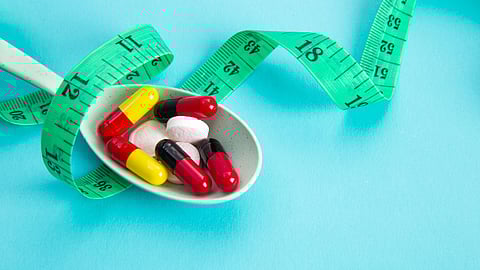

A first-of-its-kind oral GLP-1 pill developed by Eli Lilly has delivered significant weight-loss results in a major global trial, marking a potential shift in obesity and diabetes treatment. The once-daily drug, orforglipron, tested across more than 1,500 adults in 10 countries, helped participants lose around 10% of their body weight over 72 weeks, according to a study published in The Lancet.
Unlike injectable brands such as Ozempic and Mounjaro, orforglipron does not require needles, refrigeration or clinic-based training — a convenience that doctors say could dramatically widen access to effective obesity care.
In an exclusive interaction with Voice of Healthcare, leading Indian endocrinologists weighed in on the study’s implications, calling the pill a much-needed alternative in a world where injectable GLP-1 drugs remain costly and inaccessible for millions.
Dr. Vijay Negalur, HoD – Diabetology, KIMS Hospitals, Thane, said the study has gained attention for good reason — it brings the well-known benefits of GLP-1 drugs into a simple, once-daily pill.
“For many patients who hesitate with injections, the convenience itself is a major advantage,” he said. “Clinical data shows that it can lead to meaningful weight loss over time, making it a promising alternative for individuals looking for a needle-free option.”
He added that orforglipron acts on appetite-regulating pathways in the same way as injectable GLP-1 medicines, offering moderate yet significant results.
Dr. Negalur highlighted that current evidence indicates a generally well-tolerated safety profile, with the most common side effects being mild gastrointestinal symptoms such as nausea or stomach discomfort.
He underscored the pill’s ease of use, pointing out three major advantages:
It can be taken with food
No restrictions on water intake after swallowing
Fits seamlessly into daily routines
“This makes it a patient-friendly option, especially for those who prefer an oral therapy they can consistently maintain,” he said.
While injectable GLP-1 drugs still demonstrate higher weight-loss numbers, he emphasized that long-term safety data is still evolving, and patients with medical conditions should consult clinicians before starting therapy.
Calling the results “a significant advance in obesity and diabetes care,” Dr. Saptarshi Bhattacharya, Senior Consultant, Endocrinology, Indraprastha Apollo Hospitals, said orforglipron marks the first time a once-daily pill has produced nearly 10% weight loss along with improvements in glucose and metabolic markers.
“These benefits were previously seen mainly with injectable GLP-1 drugs,” he explained. “The real appeal is convenience — no injections, no refrigeration, no clinic-based training.”
According to him, this ease of use could dramatically expand the reach of effective obesity treatment, especially in lower-resource settings where injectables remain unavailable or unaffordable.
Dr. Bhattacharya noted that the safety profile mirrors what clinicians already observe with semaglutide or tirzepatide — nausea, vomiting and other gastrointestinal effects during dose escalation, which typically improve with time.
“While orforglipron does not match the weight-loss degree of semaglutide or tirzepatide, it offers a practical and scalable alternative,” he said.
If ongoing research confirms long-term metabolic and cardiovascular benefits, Dr. Bhattacharya believes the pill could shift obesity treatment beyond a niche therapy, enabling far broader access than current injectable options.
Injectable GLP-1s can cost more than $1,000 a month in the US, making them out of reach for many. Experts have long advocated for affordable oral versions or generics, especially in low-income countries where obesity-related illnesses kill over 3.7 million people annually, according to the WHO.
If approved by the US FDA, orforglipron could be available by 2026, and Eli Lilly says it plans to price it significantly lower than existing injectables.
With global obesity rates rising and demand for weight-loss therapeutics surging, experts agree that orforglipron could become a milestone in making effective obesity care more accessible, scalable and patient-friendly.
